Indoor Air Quality
Stop paying to heat and cool the outdoors — proper insulation cuts energy loss and makes every room more comfortable.
You can install the most efficient furnace on the market and still have a cold house. Heating and cooling equipment fights the building envelope, and in Toronto's older housing stock that envelope is often losing the fight — uninsulated attics, minimal wall cavities, open rim joists, and leaky attic hatches all pull heat straight out of the home.
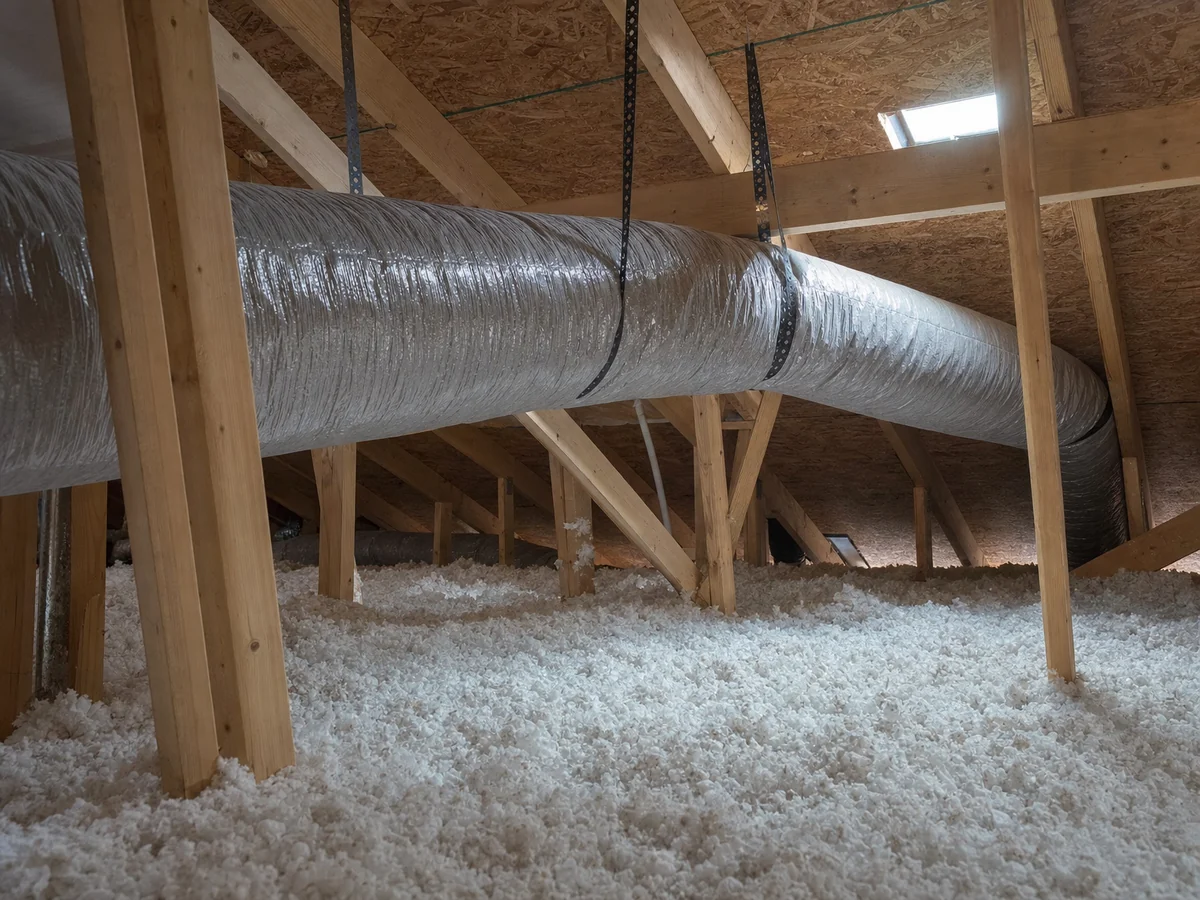
NorthPoint approaches insulation as part of the comfort system rather than a separate trade. We assess where the heat is actually going: attic insulation depth and coverage, air sealing at top plates, pot lights and plumbing stacks, rim joist and basement header conditions, and whether the attic is properly ventilated to keep the assembly dry.
The attic almost always delivers the best return in a GTA home. Air sealing penetrations first, then blowing insulation to a proper depth, cuts heat loss immediately and directly reduces how hard your furnace has to run. Rim joists and basement headers are the second-biggest win and one of the most consistently neglected areas in Toronto houses.
The payoff shows up in three ways: lower bills, rooms that finally hold temperature instead of swinging, and equipment that can be sized smaller when it is eventually replaced. Rebates are frequently available for insulation and air sealing work, and we will walk you through what applies.
You can install the most efficient furnace on the market and still have a cold house. In Toronto's older housing stock the envelope is usually losing the fight — thin attic insulation, open rim joists, leaky attic hatches and uninsulated wall cavities pull heat straight out of the home faster than the equipment can replace it.
Insulation slows heat transfer; it does not stop air movement. Blowing more insulation over unsealed top plates, pot lights and plumbing stacks buries the leak instead of fixing it. We seal the penetrations first, then insulate — in that order, which is where most of the measurable improvement comes from.
The attic almost always delivers the best return in a GTA home: seal, then bring insulation up to a proper depth, and confirm the ventilation keeps the assembly dry. Rim joists and basement headers are the second-biggest win and one of the most consistently neglected areas in Toronto houses.
Lower bills, rooms that hold temperature instead of swinging, and equipment that can be sized smaller when it is eventually replaced. Rebates are frequently available for insulation and air sealing work, and we will walk you through what applies to your home.
“We switched from another plumbing and HVAC service to NorthPoint and we couldn’t be more happy. Their prices are more affordable, their people more knowledgeable, and they get to you fast — especially important when your AC blows out in the middle of summer!”
— B. Parker
“The techs are prompt, friendly and trustworthy. They are knowledgeable and professional, and they explain what they are doing instead of just handing you a bill. I highly recommend them.”
— Barbara K.
“Showed up the same afternoon and explained everything he was doing. Very thorough, polite and professional — and cleaned up the whole area afterward.”
— Aimee B.
Your home may be under-insulated if:
We focus on the areas that matter most in GTA homes:
Many Toronto homes were built long before modern insulation standards, leaving attics and walls that bleed heat in winter and gain it in summer. Upgrading insulation is one of the most effective ways to make an older GTA home comfortable and affordable to run.
For most Toronto homes, the attic delivers the biggest comfort and savings return, followed by air sealing.
It varies by home, but reducing heat loss lowers heating and cooling bills and eases the load on your HVAC system.
Energy-efficiency programs often include insulation. We'll help you understand what you may qualify for.
Yes — insulation slows heat gain, so upstairs rooms stay cooler and your AC works less.
Heat escaping into the attic melts roof snow that refreezes at the eaves. Insulation and air sealing help prevent it.
Yes — a well-insulated home needs less heating and cooling, so equipment cycles less and lasts longer.